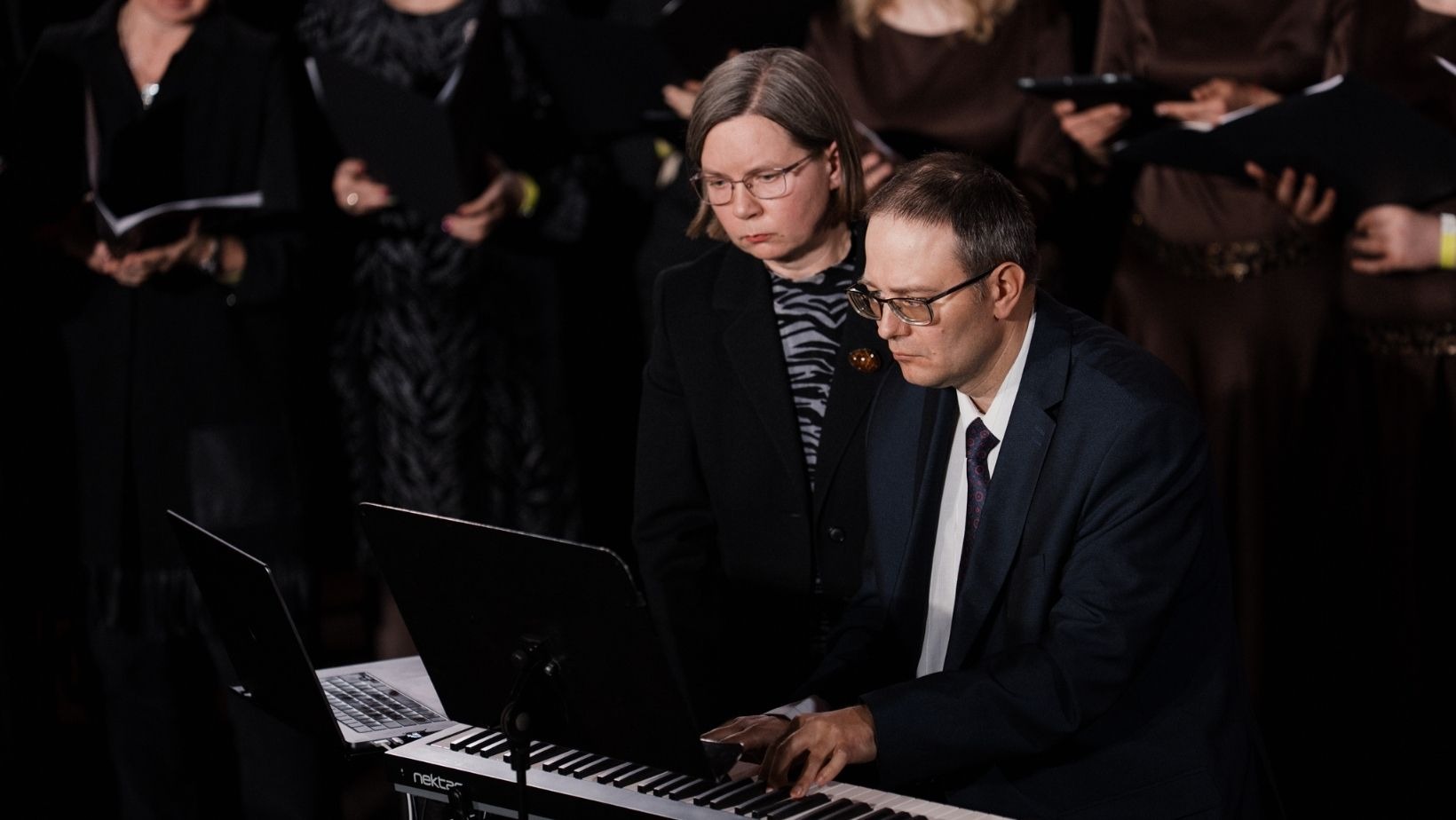
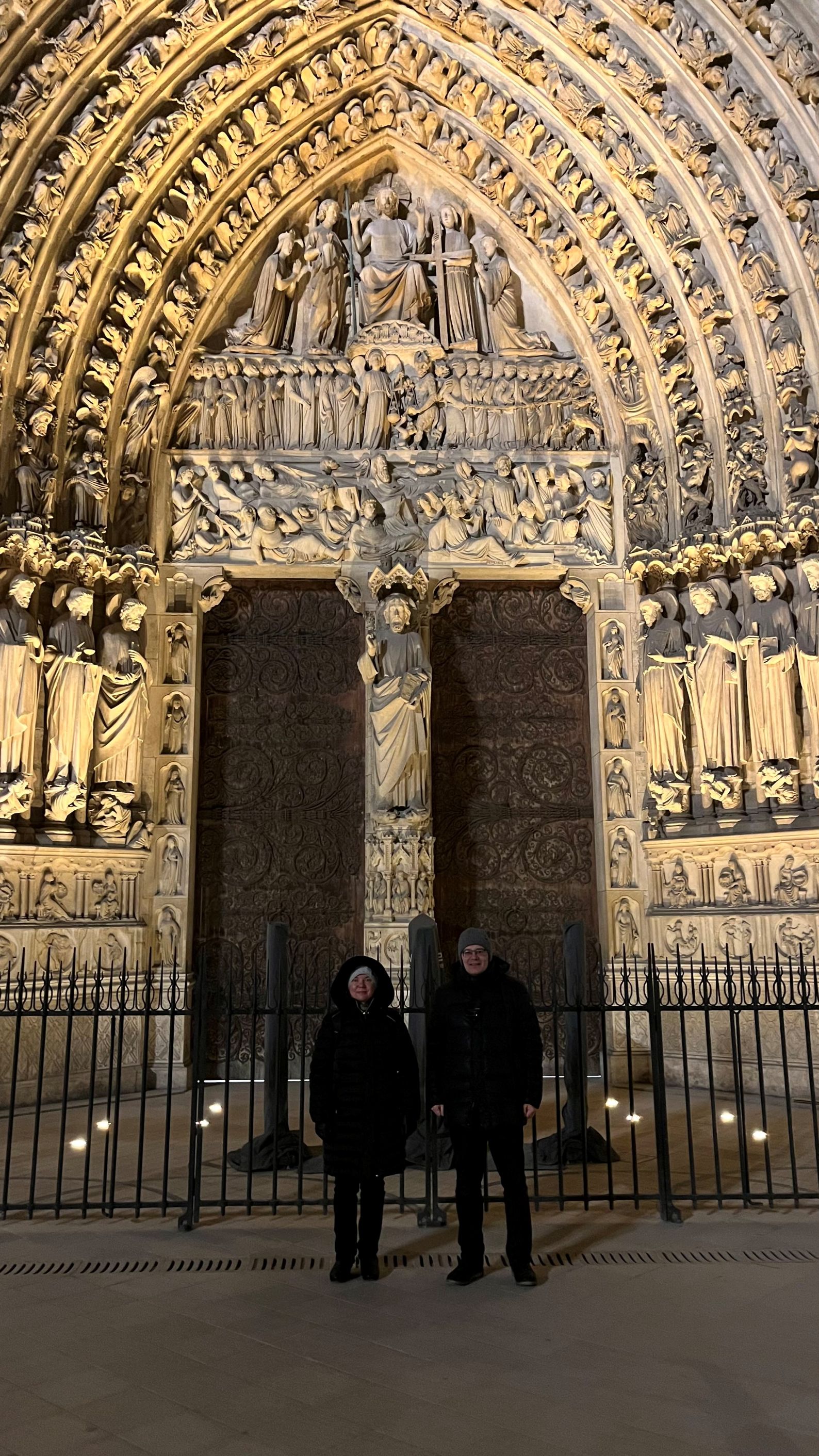
In January, the directors, organists, and teachers of the Vilnius University Cultural Center organ studio “Unda Maris,” Dr. Vidas Pinkevičius and Dr. Aušra Motūzaitė-Pinkevičienė, performed at Notre-Dame Cathedral in Paris during the 2025–2026 season of Sunday organ concerts.
Across two solo performances in one of the world’s most famous cathedrals, a broad repertoire was presented — from Johann Sebastian Bach to French Romantic organ music, as well as original compositions by the performers themselves. One of these was Prayer to the Sun, based on the melody of the Lithuanian folk song Saulele, motule (“Little Sun, Dear Mother”).
As the organists themselves note, this is likely the first time since 1990 that organists from independent Lithuania have performed at Notre-Dame Cathedral. We spoke with the performers about this experience, their impressions, and the highlights of the program.
“Fantastic!”
Asked to describe the concerts in one word, the performers do not hesitate: “Fantastic! We feel as if we are in a wonderful dream we do not want to wake up from.” Their international concert experience continues in Vilnius as well — Vilnius University students and staff can learn to play the organ for free at the VU Cultural Center’s “Unda Maris” studio, located in St. John’s Church. The studio is open both to beginners and to those with prior musical training.
A Historic Moment
Performing at Notre-Dame Cathedral represents not only a personal but also a historic event for the artists:
“If memory serves us right, we are the first Lithuanian organists to perform in this cathedral since 1991. Aušra is probably the very first Lithuanian woman organist ever to play there. The concert exceeded all expectations.”
This experience became an important professional milestone:
“For us personally, this concert is a major step forward in our professional careers, because playing the organ in this cathedral — instruments once played by such great masters as Louis Vierne, Marcel Dupré, and Pierre Cochereau — is probably every organist’s dream. Thanks to this experience, we are even more inspired to encourage the members of our ‘Unda Maris’ studio to strive for excellence and pursue their goals.”
A Cathedral Reborn After the Fire
The organ and the cathedral itself left a profound impression:
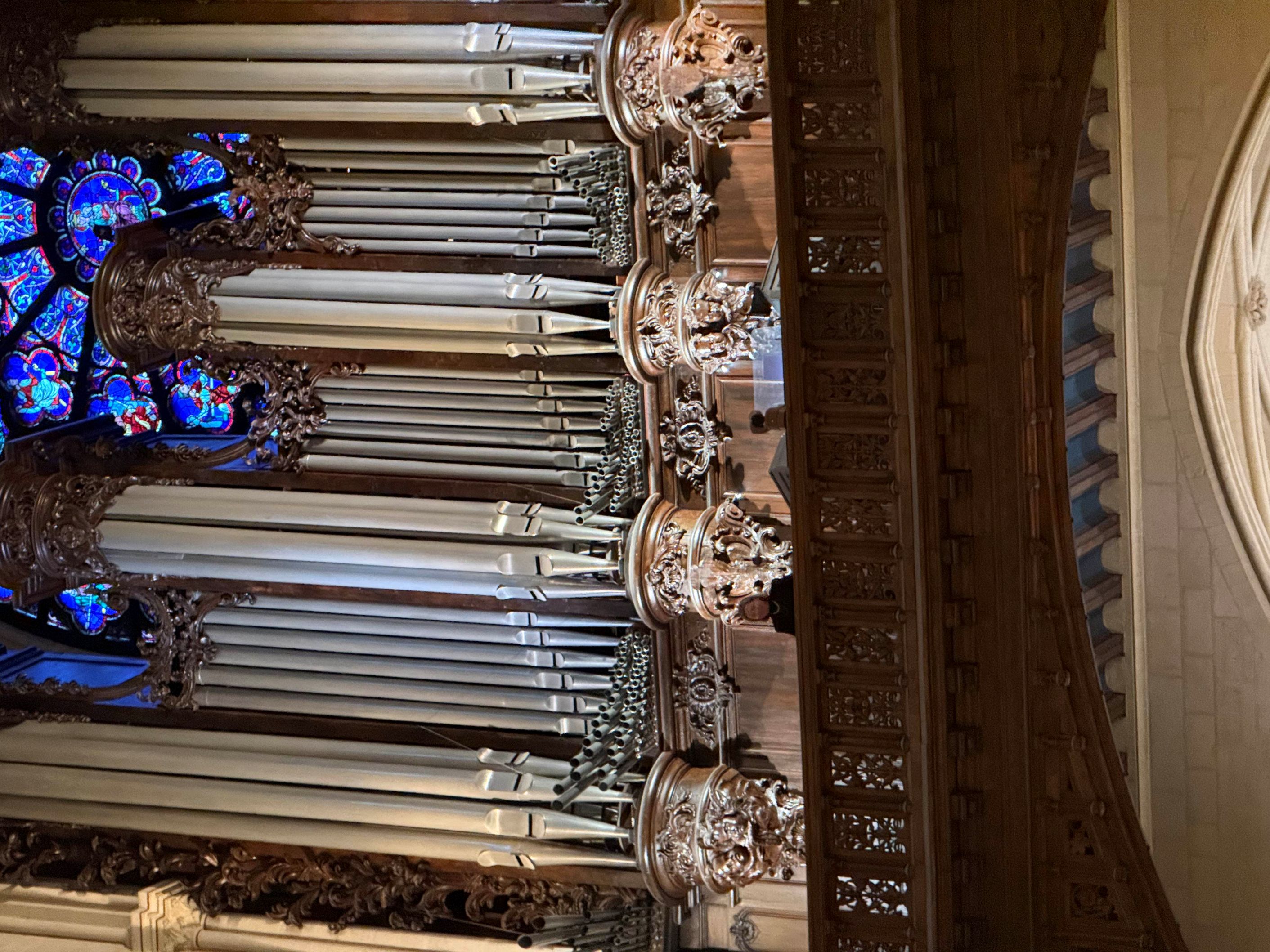
“After the fire, we did not expect that we would ever have the chance to play there at all, because the waiting list of those wishing to perform is very long. But eventually, our turn came.
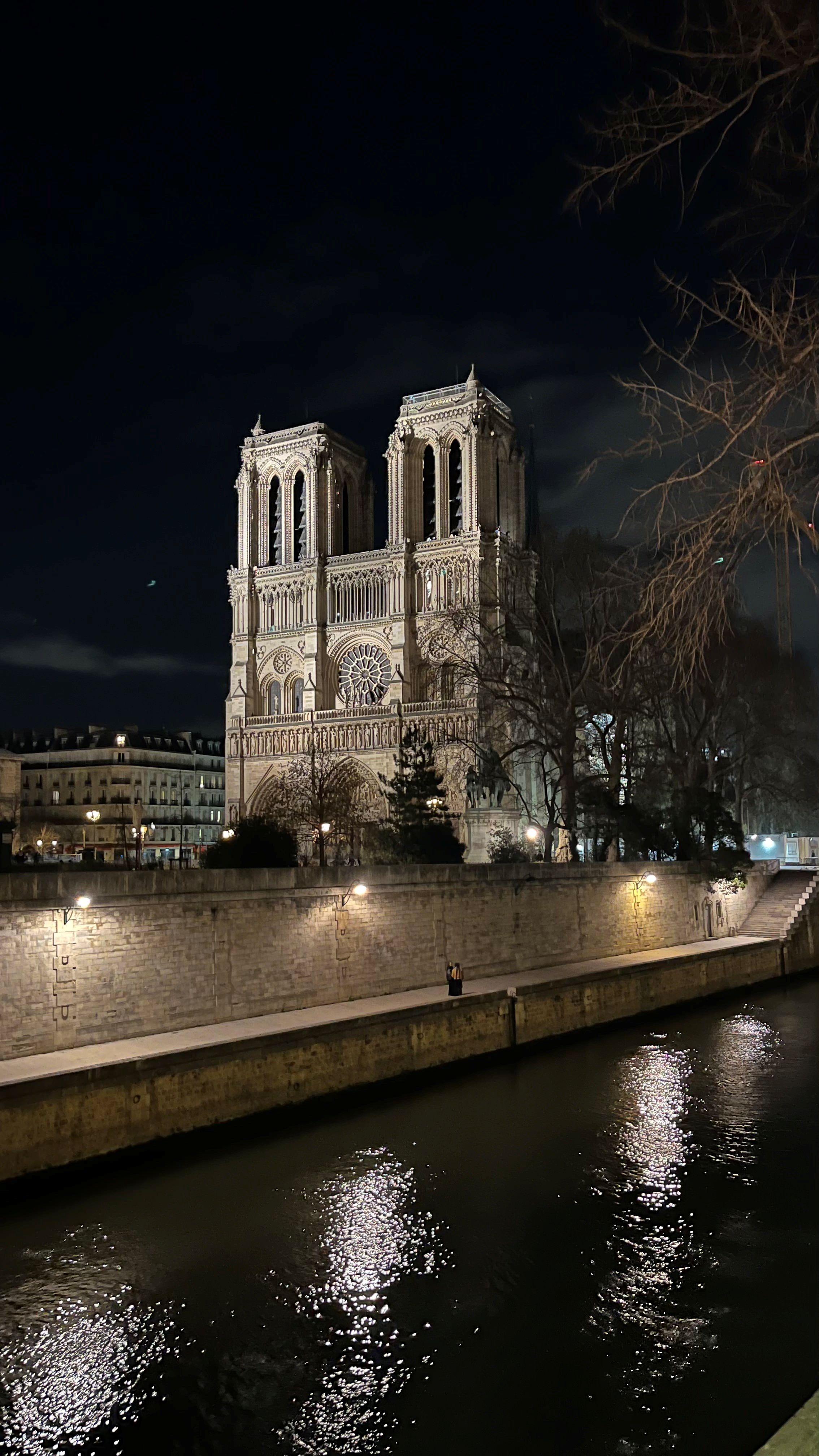
Sunday organ concerts take place at Notre-Dame Cathedral. Thanks to Victor Hugo’s novel The Hunchback of Notre-Dame, it was already one of the world’s most famous cathedrals, and after the 2019 fire and its extraordinarily meticulous and rapid restoration, it has become even more renowned.
The world-famous grand organ (8,000 pipes, 115 stops, five manuals, and pedals) was not damaged during the fire, but for safety reasons it was dismantled and transported to another location, where it was cleaned and stored until, after the cathedral’s restoration, it was returned to its original place.
Originally, our concerts were scheduled to take place there before the fire (Vidas — August 2019, Aušra — July 2020).”
Highlights of the Program
Asked which moments stood out most, the performers emphasize the program as a whole:
“It is very difficult to single out just one piece, because all of them sounded unique. In Vidas’s program, perhaps the most impressive was the fanfare-like Grand Chœur Dialogué by the French composer and organist Eugène Gigout. For Aušra, the most memorable was Albert Renaud’s Toccata in D minor.
Since in Lithuania we do not really have authentic French symphonic-style organs, we are delighted to have the opportunity to perform these works on instruments that are especially well suited to such music.”
Dr. Aušra Motūzaitė-Pinkevičienė speaks about a particularly personal moment:
“The moment that stayed with me most was when I played my own composition Prayer to the Sun, based on the melody of the Lithuanian folk song Saulele, motule. It was wonderful to hear the canon of this archaic Lithuanian melody between the soprano and pedal parts beneath the majestic vaults of a medieval cathedral.”
The concert program included works by Johann Sebastian Bach, Niels Wilhelm Gade, Charles-Marie Widor, Eugène Gigout, and Albert Renaud, as well as the performers’ own compositions — Dr. Vidas Pinkevičius’s suite Wie schön leuchtet, Op. 287, and Dr. Aušra Motūzaitė-Pinkevičienė’s Fanfare Processional in D, Op. 20, and Prayer to the Sun, Op. 26.